The shortest day has passed – brighter days are on the way
Posted 18th December 2025
Each year, the shortest day of the year arrives quietly, often without much fanfare. In the UK, winter solstice falls on Sunday 21 December, bringing with it long evenings, late dawns, and the feeling that winter has truly settled in.
But the good news is, from this point on, the days begin to lengthen again.

At first, the change is subtle, but it comes, nonetheless. By February, the difference is unmistakable, more hours of daylight not mere minutes. Spring may still feel far away, but the journey toward brighter mornings and lighter evenings has already begun.
In the meantime, winter invites us to slow down, stay cosy, and take care of ourselves and our homes. With energy costs still a concern for many households, there are sensible ways to stay warm and comfortable while keeping energy use in check.
Staying warm and saving energy
1. Keep your living space warm
Where you can, keep doors closed and focus heating on where you spend most of your time. Or where you want to feel warmest – where you sit and relax or perhaps where you sleep?
A comfortable indoor temperature for most people is around 18–21°C — warm enough for health and comfort without overdoing it.
2. Layer up, indoors too
A light jumper, warm socks, or a cosy cardigan can make all the difference. Layers trap heat and allow you to adjust easily if you feel too warm or too cool.
Keeping your feet warm is especially important. Cold feet can make your whole body feel chilly.
3. Make the most of natural daylight
Even on winter days, daylight is a valuable source of warmth and wellbeing. If you can, getting out for a short stroll or popping to the café or shop is important.
Daylight also helps lift mood and supports healthy sleep patterns which is especially important during the darker months.
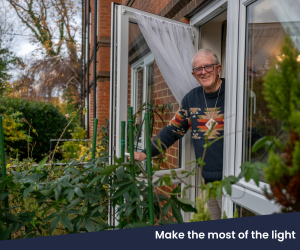
If you can’t get out, let the light in;
- Open curtains during the day to let in natural light
- Close them at dusk to keep the warmth in
- Sit near windows during daylight hours when possible
4. Simple draught-proofing goes a long way
You don’t need major home improvements to reduce heat loss.
- Use draught excluders at doors
- Roll up towels for unused doorways
- Close curtains fully in the evenings
- Check letterboxes and keyholes for cold air
These small steps help keep warm air inside, where it belongs, so your heating costs will not be wasted.
5. Keep moving, gently and regularly

You don’t need strenuous exercise to stay warm. Gentle movement helps circulation and keeps joints flexible.
- A short walk
- Light stretching
- Tidying or pottering around the house
Even a few minutes at a time can help you feel warmer and more comfortable.
6. Hot drinks and warm meals
A warm cup of tea, soup, or porridge isn’t just comforting — it helps raise your body temperature from the inside. Perhaps try some batch cooking to save energy. Cook a lot at once then reheat portions as you need them will keep your energy costs down too.
Regular meals, especially warm ones, help maintain energy levels and keep you feeling cosy throughout the day.
A thought for the season ahead
As we move beyond the shortest day, it’s reassuring to know that each day now brings a little more light. Winter won’t last forever, and brighter mornings are on their way.
If you’ve found that your current home feels harder to keep warm, winter can also be a good time to reflect on whether your space still suits your needs. A smaller, well-designed home can be easier to heat, simpler to manage, and wonderfully cosy.
Explore the retirement rental properties available at My Future Living, purpose-built homes that offer comfort, warmth, and peace of mind, without the responsibilities of home ownership.
Sometimes, a change of space can make all the difference. Helping you stay cosy now, and comfortable for many winters to come.

